
Ignore Your Colour Palette, Embrace Your Inner Mystical Gothic Witch
Seasonal colour analysis promises you an entirely new and flattering wardrobe - but there’s more to this trend than meets the eye. Seasonal colour analysis fails to miss something integral about colour in fashion: colour should be expressive not just flattering.
What Is Seasonal Colour Analysis?
The idea of seasonal colour analysis first emerged in the 1980s in Colour Me Beautiful, a book by colour consultant Carole Jackson. It divides people into four seasonal categories; Summer, Winter, Spring, or Autumn, depending on their hair shade, eye colour and skin tone. Theoretically, your most flattering colours are found within your season. While the concept is decades old, it has become increasingly trendy on Tik Tok in recent years with several seasonal colour palette filters now on the app to help users find their colour season. The theory has become increasingly complex, now with more sub-categories under each season: clear, deep and cool. There are thousands of videos on social media of people being draped in different colours and being told which shades make them ‘pop’. The concept is that everyone has a set of shades they should reach for, and other colours to avoid wearing lest they look ‘washed out’.
Overall, this theory encourages ‘optimisation’ of appearance over personal expression and perpetuates a restrictive and binary idea of colour.
Some argue that knowing your best colours helps you build a more sustainable wardrobe, as you are aware what colours you prefer and feel good wearing. However, this is not something a colour season analysis can figure out for you. There are also instances where individuals have posted how they threw out their entire wardrobe and bought an entire new one after getting an analysis which is clearly not sustainable. The whole point of fashion and being experimental is not following stringent rules. There may be something of value in this trend as it is easier to experiment and break rules when you know what they are, but overall the way it is presented on social media does not encourage this.
The Psychology of Colour Preference and Colour as Personal Expression
After watching a lot of colour analysis videos, it is clear that the goal is to find colours that look harmonious and bring attention to our face, not the clothes. This is a nice goal to have when you want to present yourself as an individual e.g. at a corporate job but less so when you want to experiment with your fashion – in this case often it is more about the clothes themselves than how much your top flatters your eye colour.
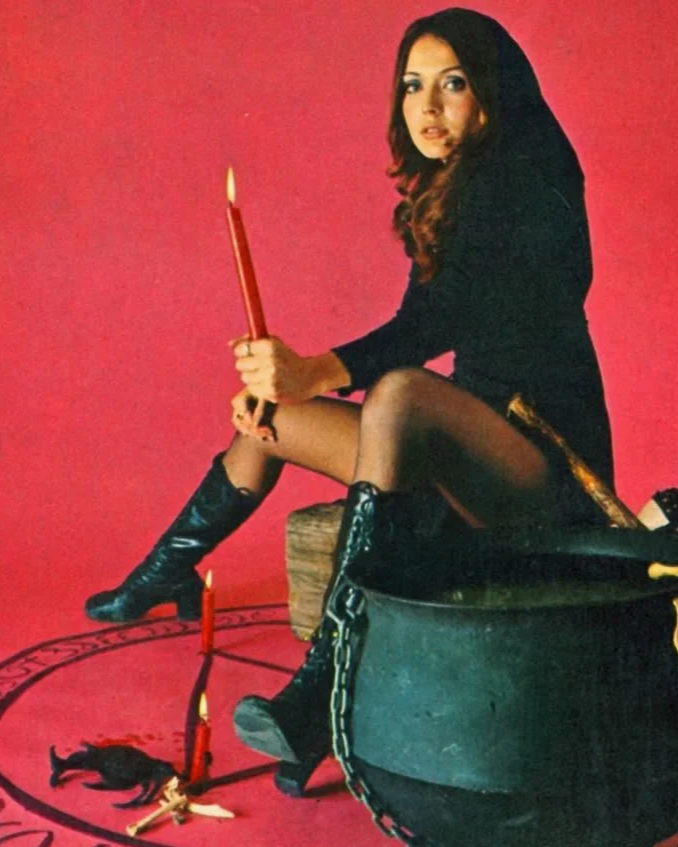
When it comes to being expressive and playful with your fashion, colour analysis becomes extremely limiting as it doesn’t take into account what you want to portray. As a light summer (I think?), I might not always want to look like a pink pastel princess, sometimes I want to look like a mystical gothic witch (which doesn’t involve a whole lot of pastels).
Colour Seasons also neglect the personal aspect of colour, people are often drawn to certain colours for innate reasons. These preferences may reflect personality or emotions, or even events and memories. This all links to colour psychology: the idea that colour has an impact on mood, feelings and behaviours. Artists and interior designers have long believed that colour can dramatically affect moods, feelings and emotions. Colour is a powerful communication tool and can be used to signal action, influence mood, and even psychological reactions. Colour is also self-expression: colour allows us to communicate how we’re feeling, how we want to feel or how we want other people to interact with us, without actually saying anything at all. We all have our own perceptions for different colours and what they mean to us, whether that’s positive or negative, it depends on you as a person and your behaviour towards the colour.
The Green Lady of Brooklyn and The Yellow Lady/Miss Sunshine.
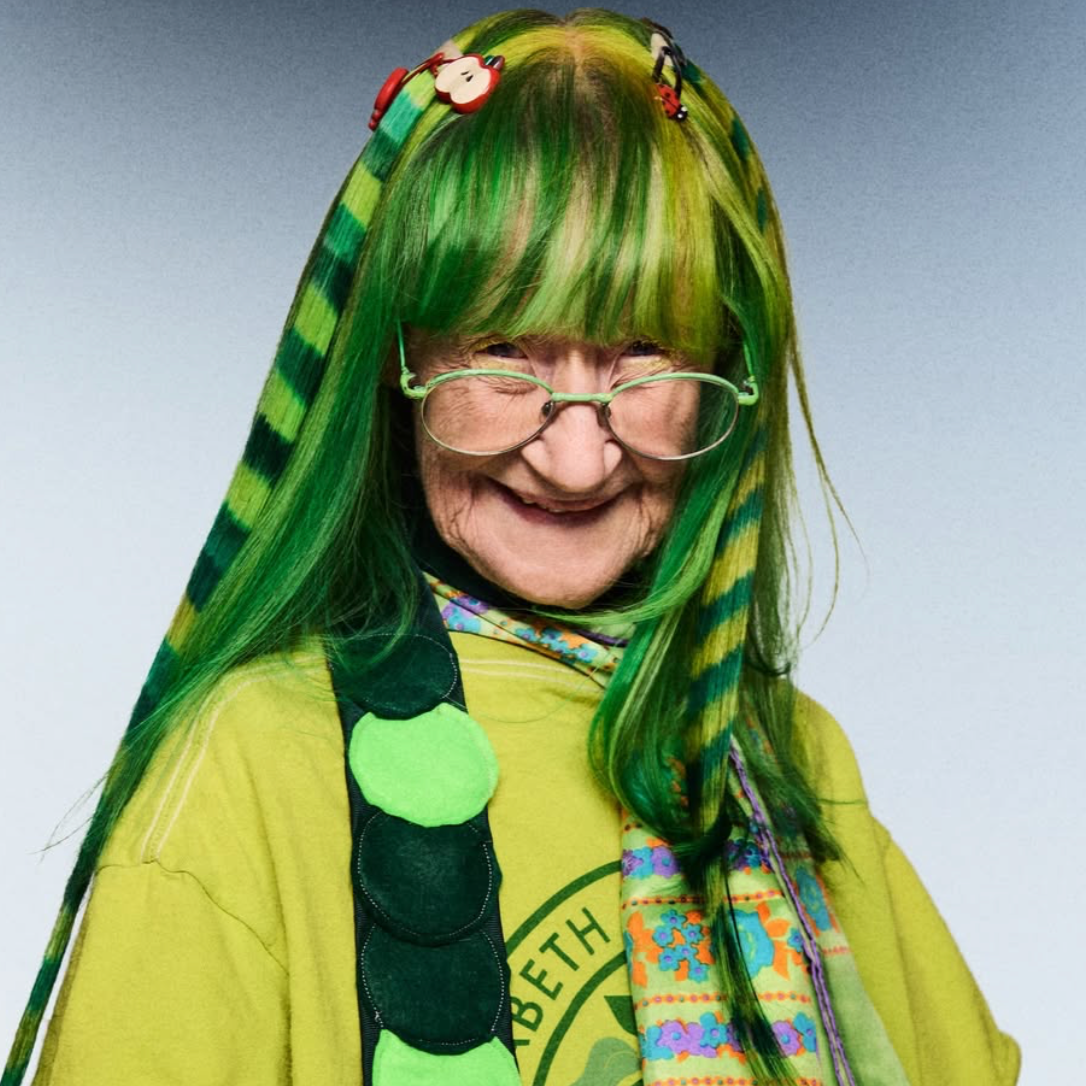
Elisabeth Eaton Rosenthall, aka the Green Lady of Brooklyn, has been wearing her signature bright-green-yellow shade for 25 years. She describes this as an organic process, she was never drawn to dark colours and green made her happy. Over time it began to take over her wardrobe. The shade perhaps isn’t one you would consider traditionally flattering or within Elisabeth’s colour season but it has become something of an iconic brand for her.
Ella London, aka the Yellow Lady – or Miss Sunshine, has a similar affiliation with the bright yellow, which began when she made yellow the feature of her wedding to honour the memory of her late father as yellow was his favourite colour. This continued naturally over the years as a way for her to stay connected with her father until yellow almost entirely took over her wardrobe. For Ella, wearing yellow isn’t about how flattering it looks, it’s about personal memory and connection.
Wearing colours you love – even if they would be considered ‘unflattering’ or out of your colour season, is empowering and expressive as it allows you to experiment more with your fashion. It allows you the freedom and authenticity to dress intuitively. To become more experimental with fashion, the focus must be shifted away from optimisation and towards playfulness and expression. Experimenting with colour can then become a form of self-discovery, and dressing itself a creative and expressive act. Colour is a reflection of identity, not just a tool to optimise your appearance; don’t let your colour season oversaturate your creative expression.